Prioritizing What Matters Most When Specifying the Alarm Communications Pathway
Why Newer Doesn’t Always Mean Better in Campus Alarm Communications
Priorities for Alarm Signaling Communication
The rapid pace of technological innovation has brought both opportunity and complexity to nearly every industry, including fire and life safety. As system capabilities continue to evolve, Fire Protection Engineers and system integrators are faced with the increasingly difficult task of sorting through an ever-growing catalog of products and components to design the most effective systems.
That is why it is more important than ever to not get distracted by what appears newer, faster, or more advanced. Instead, each part of a complex system should be evaluated and specified according to the role it plays in protecting people and property. When it comes to selecting an alarm communications pathway for campus-based projects, the priorities are clear: control, resilience, scalability, and lifecycle reliability.
Reducing Outside Dependence and Giving Campuses Control of Critical Signaling
When specifying alarm communications technology for a campus-based project, creating a stable foundation for long-term life safety performance should always be the top priority. That is why critical signals should not be left to the mercy of service changes or other outside variables introduced by third party providers.
Rather than relying on cellular and internet communications, a private, licensed alarm network gives campuses greater control over the health, speed, and security of their network. In large, multi-building environments, added control can make the communications path more predictable, more manageable, and better suited to the varying demands of the property.
Private Wireless Mesh Technology Overview
What is an AES Mesh Network?
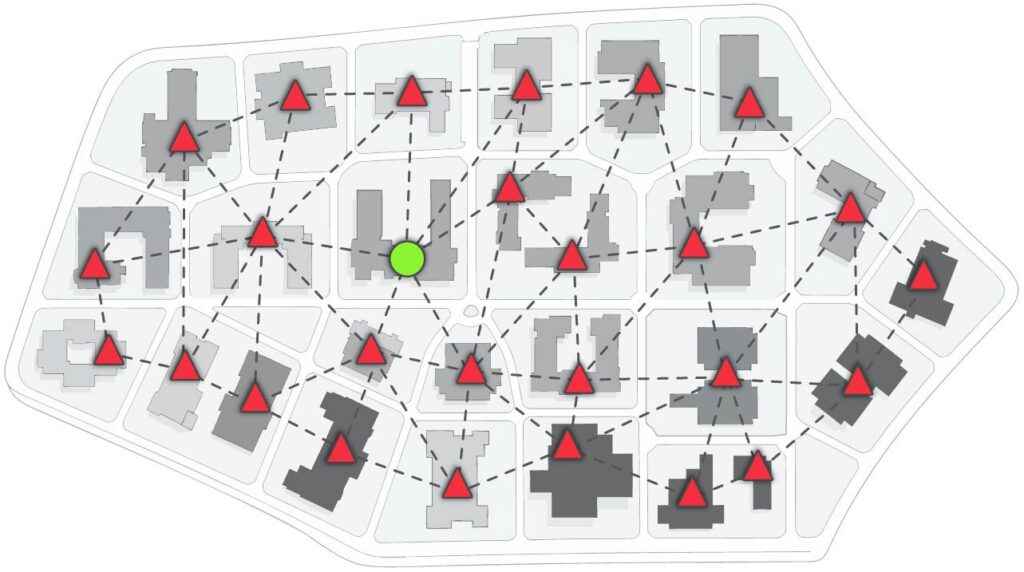
AES’s IntelliNet® Mesh Radio Technology creates a private alarm network of interconnected radios that carry alarm signals across a property without relying on a single communication path. In multi-building campus environments, each site connects to the network through an AES Subscriber, which transmits event codes from the attached alarm panel. Since every Subscriber is built to receive, repeat, and relay signals, the network can route communications across multiple paths. This is what makes the system self-managing, self-healing, and especially well suited for large properties where reliability matters most.
Built for Reliability
Every radio is a repeater
Supervised 2-way communication
Multiple pathways
Self-managing / self-healing
Secure and jam-resistant
No single point of failure
Components of an AES Mesh Network
Components of an AES Mesh Network
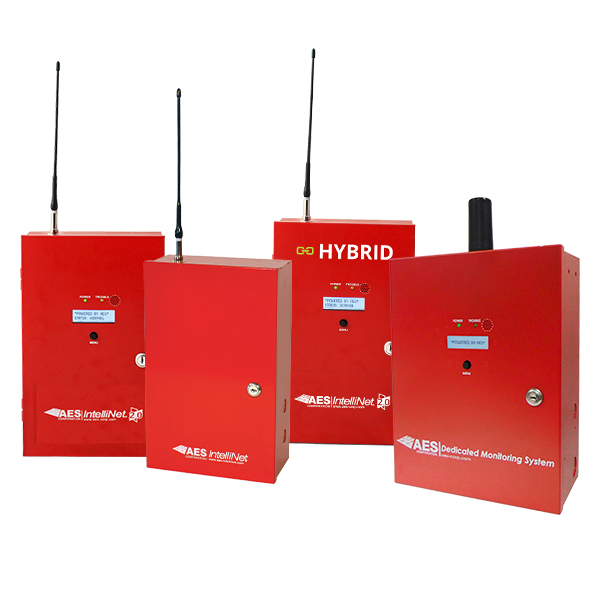
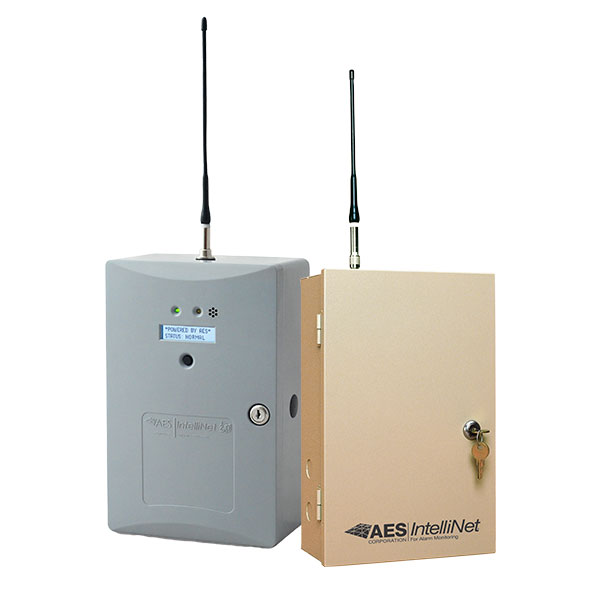
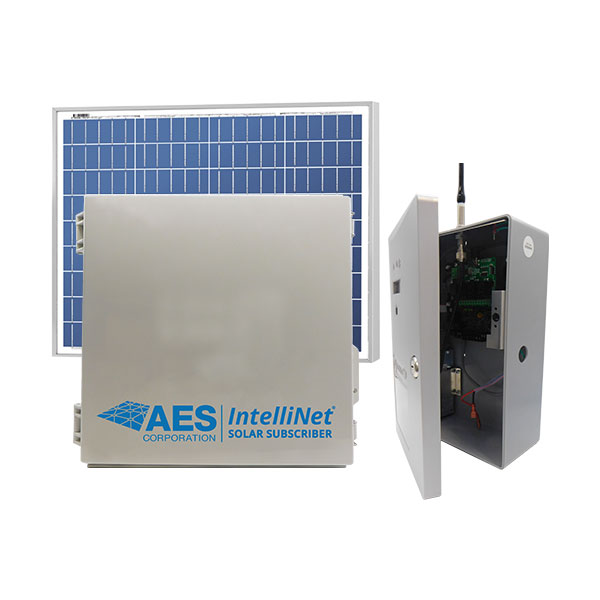
A private mesh alarm network is made up of field communicators (AES Subscribers) and headend equipment, which includes receivers and network monitoring tools. Subscriber units installed at protected locations connect to the alarm panel and transmit signals across the network. On the receiving end, headend equipment collects and routes those transmissions, while monitoring tools provide visibility into network health and performance.
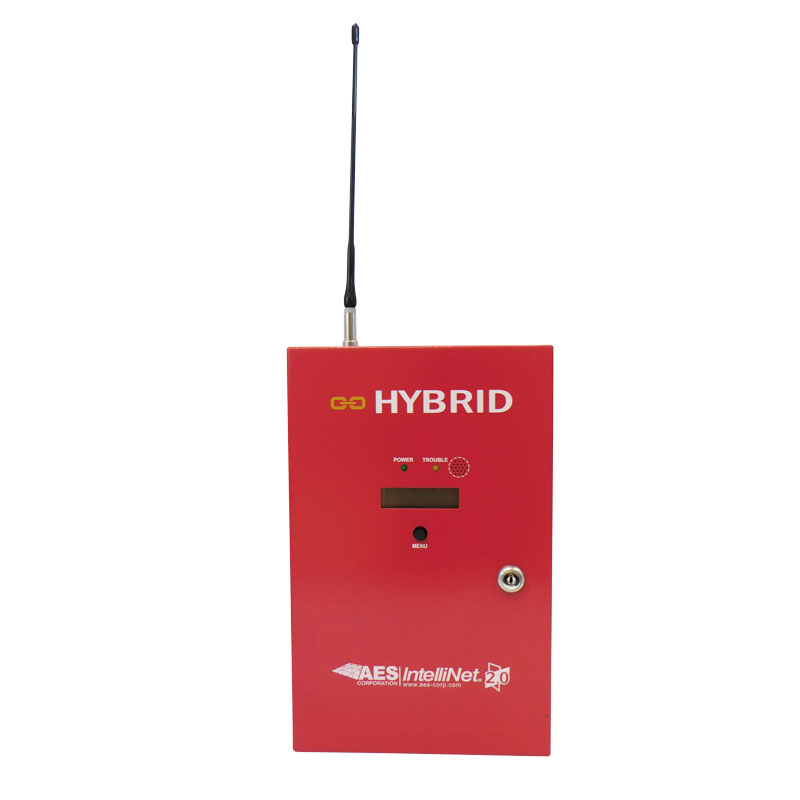
Fire Subscriber with IP gateway functionality. Converts AES Mesh Network signals to IP for receiver communication.
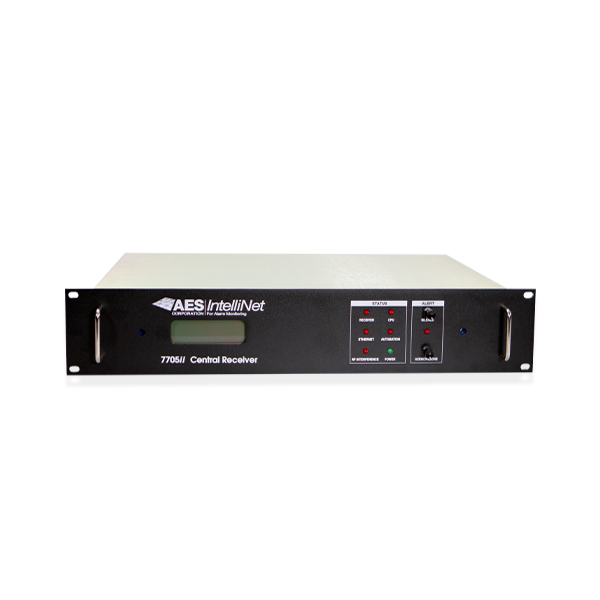
7705ii
MultiNet Receiver (MNR)
Integrates with the AES Mesh Network to provide reliable event reporting and system supervision.
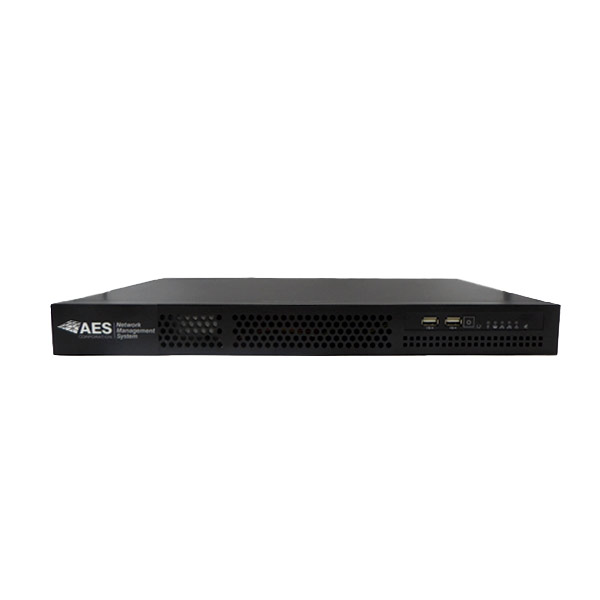
7275
Network Management System (NMS)
Pairs with MultiNet Receivers to provide real-time monitoring, network control and health data.
8705
IntelliNet Network Control Center (INCC)
Software-based receiver that combines the capabilities of the MNR and NMS into one unified platform.
Building a Resilient Alarm Communications Network
When it comes to alarm communications, resilience is not optional. It is one of the qualities that determines whether a network that delivers alarm signals can truly be counted on when it matters most.
That is where mesh architecture plays an important role. In a private mesh network, communication does not depend on a single path – instead, signals can move across purpose-built, redundant (as required by UL 864), multi-path routes, helping the network remain functional, even as conditions change.
That distinction matters even more in multi-building campus environments, where alarm signals may need to travel across distance, between different building types, and through changing physical conditions. In these settings, resilience means the network can maintain dependable performance in the face of catastrophic weather events, security breaches, and any other number of environmental factors that could render conditions to be less than ideal.
Designing a System That is Made to Scale
Scalability is about more than how far a network can reach. In campus environments, the alarm communications pathway needs to tie together multiple buildings, multiple system types, and multiple generations of equipment. It should have the ability to perform across different spaces, different construction conditions, and the real-world complexity that comes with large properties.
A scalable approach should not require every building to look the same in order for the alarm network to work. It should be flexible enough to integrate with a range of system configurations while creating a communications path that remains unified across the property.
Scalability also means solving tomorrow’s problems today. As campuses expand, renovate, or add buildings over time, the communications pathway should not create avoidable project burdens. It is important to consider alarm communications technology that offers a straightforward path for installation and is not dependent on physical disruptions, such as trenching or other unforeseen construction costs.
Sourcing Technology That Never Sunsets
In fire and life safety applications, a communications method should not be judged only by what is current at the moment of specification. It should also be evaluated by its ability to remain dependable through shifts in infrastructure, upgrades in adjacent systems, and the long operational life of the property itself.
Lifecycle reliability is not just about longevity for its own sake. It is about choosing a communications pathway that can continue to support the mission of the system, even as the environment around it changes.
Conclusion
In campus-based fire and life safety applications, the alarm communications pathway should be evaluated on more than what is new. It should be evaluated on what it can sustain over time. Control, resilience, scalability, and lifecycle reliability are not secondary considerations. They are the qualities that determine whether a communications method is truly built for the realities of multi-building properties. Viewed through that lens, private wireless mesh alarm networks continue to offer a compelling approach.
Do you want to learn more about how AES Corporation’s technology fits into your next system design? Contact a knowledgeable member of our AES Sales Team today for an obligation-free call where we can go over any questions you have!
Find out why military bases, school districts, municipalities, and college campuses throughout the country use AES Corporation for their alarm communications network by sending us your information below!